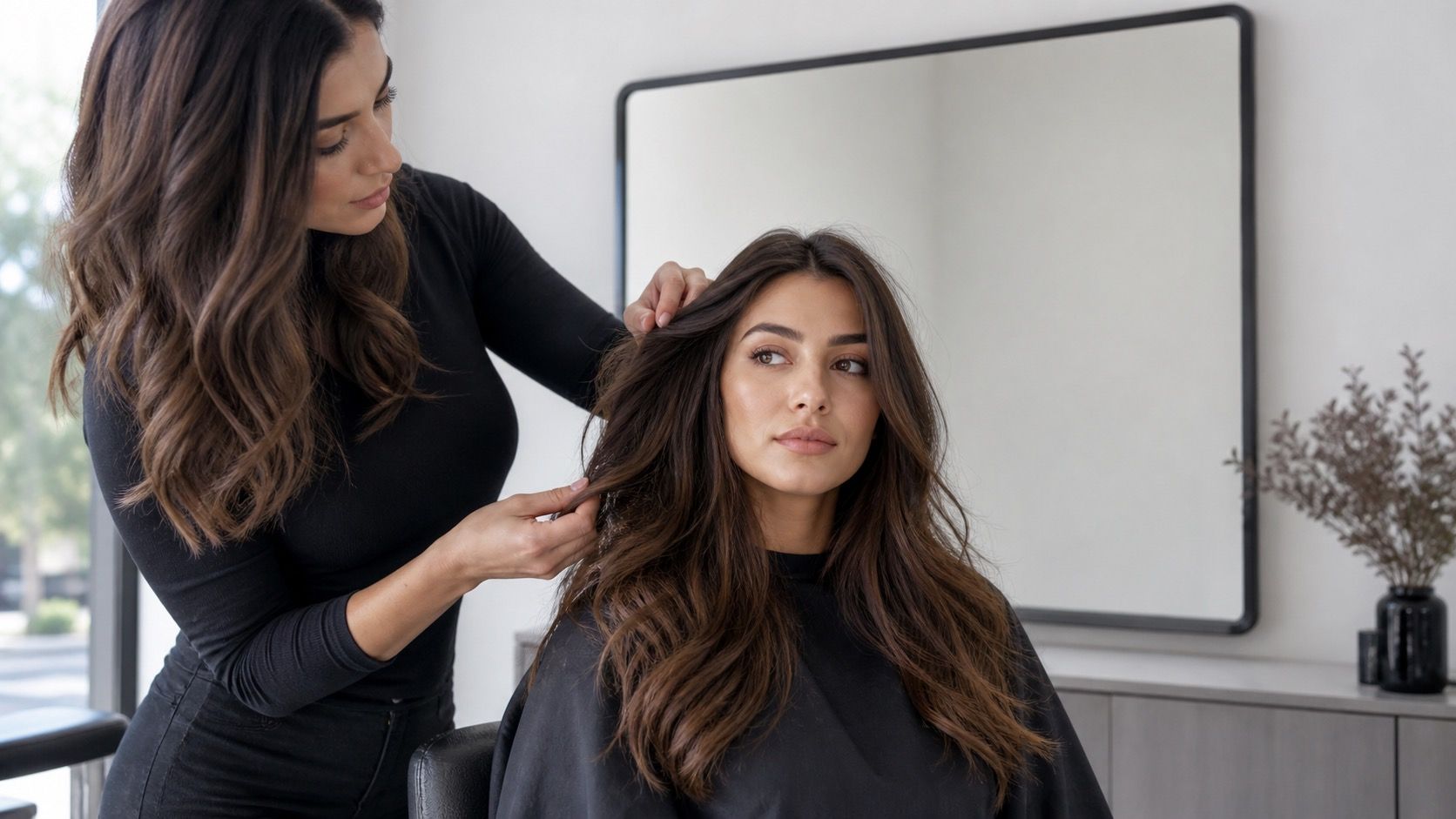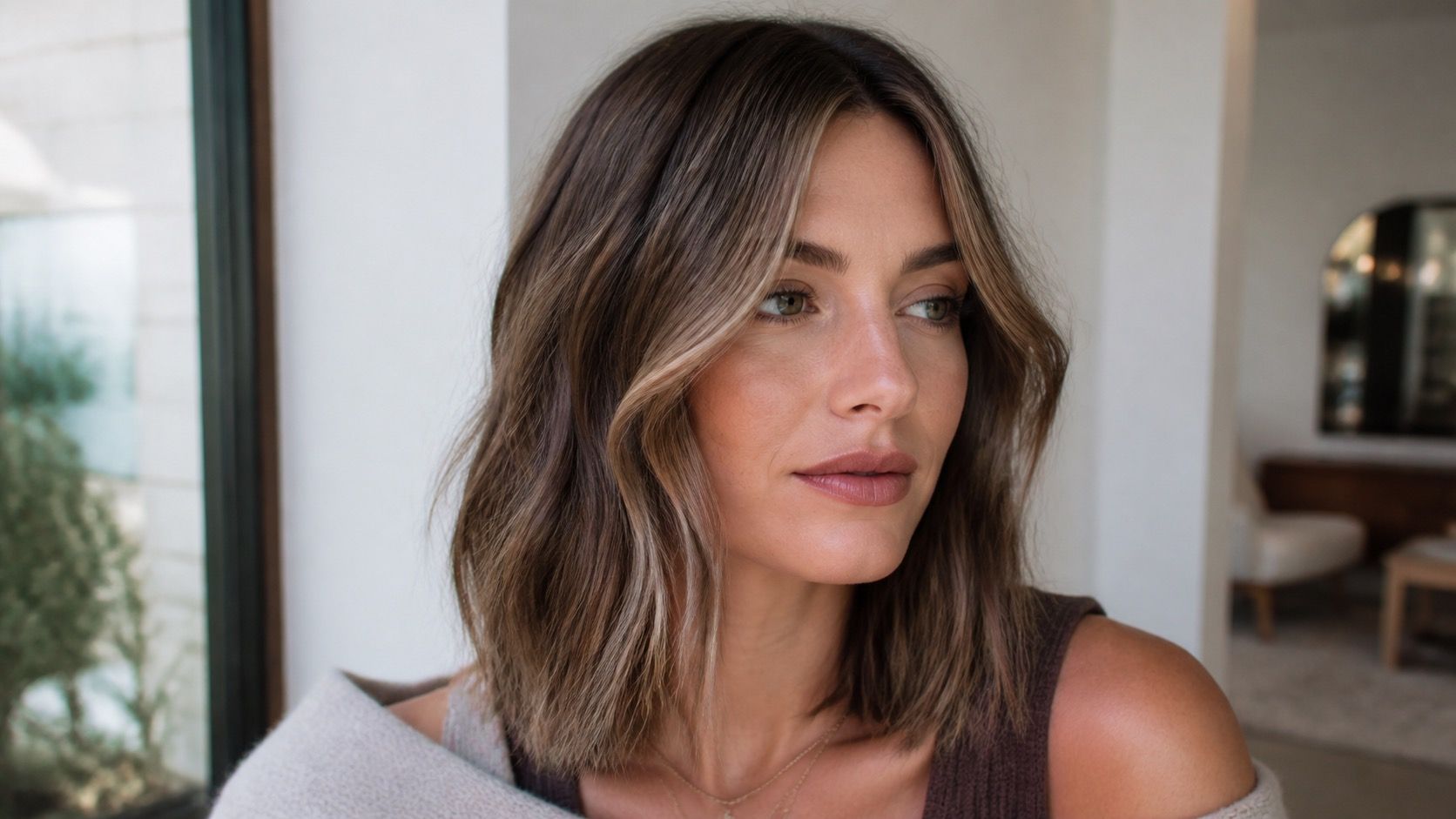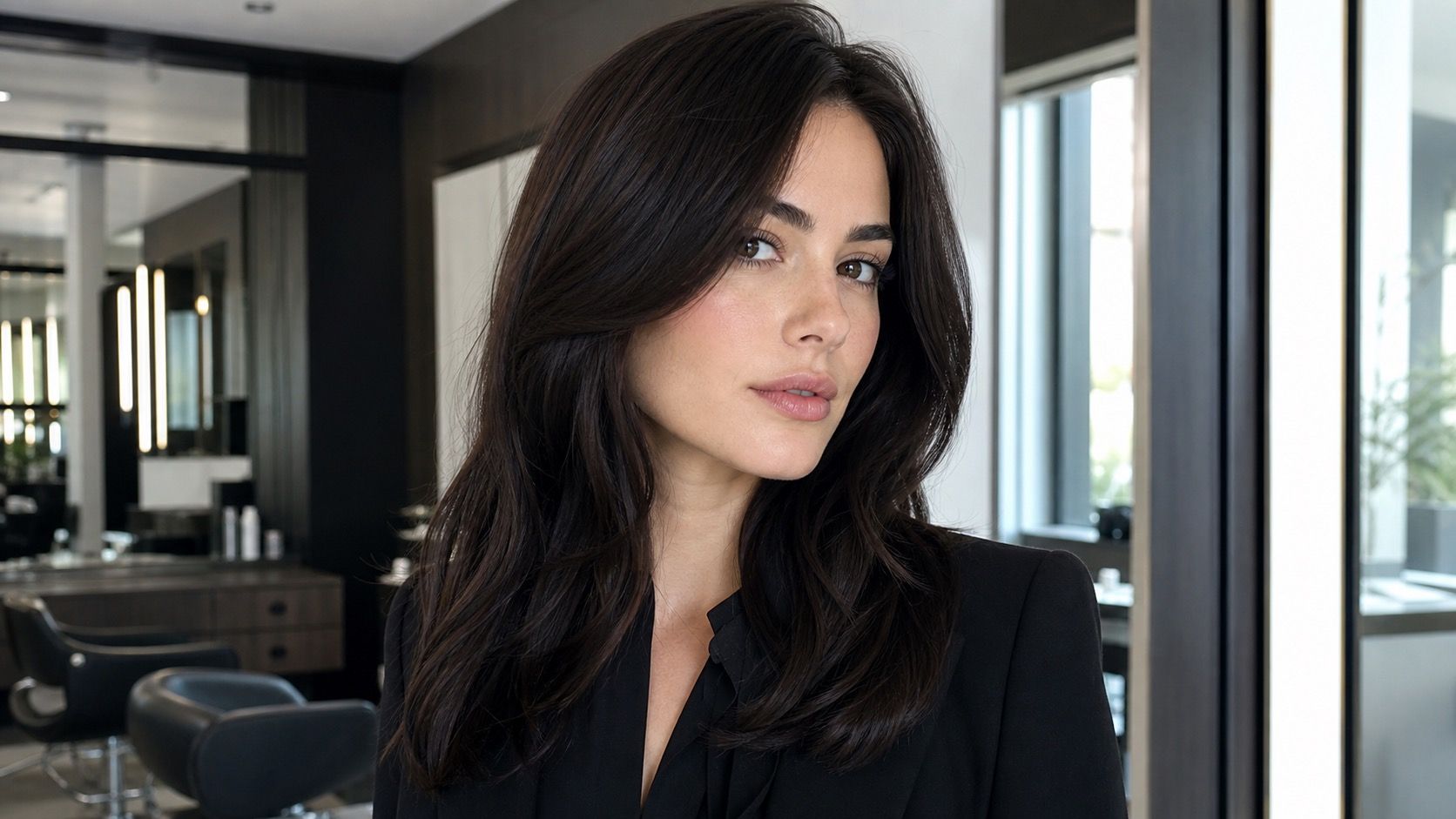
Cool Winter coloring usually looks best when the hair has definition: a clear edge between skin, eyes, brows, and hair, without the dusty softness or golden haze that can blur high-contrast features.
What Cool Winter asks from a hair color
A Cool Winter palette is built around clarity, depth, and coolness. In hair color, that means the shade should look clean rather than smoky, and cool rather than caramel or copper. The goal is not to make every person darker. It is to keep enough visual contrast so the face does not look washed out beside the hair.
The easiest checkpoint is the mirror in plain daylight. If your brows, lashes, and eye rim look crisp against your natural coloring, a very muted hair color can make the face look slightly out of focus. A clear brunette, cool dark brown, blue-black, or carefully toned icy blonde usually holds the structure better than sandy beige, warm chestnut, or soft mushroom shades.
Cool winter hair colors can be dramatic, but the useful question is practical: does the color sharpen the features, or does it steal attention from them? A shade can be cool and still too flat, too harsh, or too artificial. The best result usually has deliberate depth at the root, clean reflection through the lengths, and no rusty warmth showing around the face.
Dark shades with enough clarity
For many Cool Winter clients, the most reliable direction is a dark shade with a cool reflection. Espresso brown, black-brown, deep ash brown, and soft blue-black can support high contrast without needing constant lightening. These shades work especially well when the natural brow and lash color is already dark, because the hair reads as intentional rather than costume-like.
The difference between espresso and warm chocolate matters. Espresso stays closer to neutral-cool, with a polished brown-black finish. Warm chocolate often carries red or orange reflection that can fight with cool skin and bright eyes. If the ends have old warmth from sun, bleach, or previous dye, ask for a plan to neutralize that warmth instead of simply putting darker color over it.
Blue-black is the strongest option. It can look elegant on very high-contrast coloring, yet it shows regrowth sharply and can be hard to reverse. If you are unsure, a black-brown gloss or demi-permanent cool brunette is a safer trial than permanent blue-black. The mirror test is simple: the shade should make the whites of the eyes and the iris look clearer, not make the skin appear gray or tired.
| Direction | Best use | Watch for |
|---|---|---|
| Espresso brown | Natural depth with cool polish | Ends turning red under light |
| Black-brown | Strong contrast without obvious blue cast | Flat color if every strand is the same level |
| Blue-black | Very crisp features and dark natural brows | Hard regrowth line and difficult removal |
| Deep ash brown | Cooling down brunette warmth | Dullness if over-toned on porous hair |
When icy blonde is worth the upkeep
Icy blonde can belong in the Cool Winter range, but it is the least forgiving route. The shade needs to be clean, pale, and cool enough to feel deliberate, not yellow-beige. It also needs healthy-looking hair, because pale cool blonde shows dryness, banding, and uneven lift quickly.
The strongest icy blondes usually keep root definition. A shadow root, a cool root melt, or a few lowlights near the base can keep the face framed and stop the blonde from floating away from dark brows or bright eyes. Without that anchor, the hair may be technically cool but visually too light for the person wearing it.
Before choosing this route, be honest about bleach lift and maintenance. Naturally dark hair may need several appointments, bond support, toner refreshes, and careful heat styling habits. No article can promise that your hair will lift to a clean icy level safely. A colorist needs to see the strand history, old dye, porosity, and breakage risk before making that call.
How to avoid muddy or warm results
The common mistake is asking only for “ash.” Ash can cool warmth, but too much ash on porous hair can look smoky, gray-green, or dull. Cool Winter usually needs clarity, so the better salon language is often “cool, clean, and high contrast,” with examples of what you do not want: caramel, copper, golden beige, or soft muted brown.
Another problem is color that is cool at the salon and warm after a few washes. Old orange pigment, minerals in water, sun exposure, and hot tools can reveal warmth through the lengths. If your hair throws red or orange easily, the maintenance plan matters as much as the first formula. A gloss, blue-toned care product, or scheduled toner can help, but the right choice depends on your actual hair level.
Bring photos, but use them carefully. A filtered black-brown from a studio portrait may look cooler than it is. A celebrity icy blonde may rely on extensions, lighting, or a level of upkeep that does not fit daily life. Better references show daylight, roots, and the hair from more than one angle. They give the colorist a real target instead of a fantasy finish.
The hair-condition check before a dramatic change
A Cool Winter result should look crisp, not brittle. Before going darker, check whether the ends are porous enough to grab too much pigment and turn inky. Before going lighter, check whether the hair can handle bleach without fraying. The best color is still a poor choice if the texture collapses after the appointment.
For a major change, ask for a strand test or a staged plan. Darkening blonde hair may need filler or a controlled gloss so it does not look hollow. Lifting brunette hair may need more than one session and a realistic stopping point. Root definition can also reduce risk: you can keep depth near the scalp while adjusting the mid-lengths and ends more gradually.
If you want a practical salon note, keep it short: “I’m looking for cool winter hair colors with clear contrast, no caramel warmth, and enough depth around my face. I want to know what my current hair condition can handle.” That gives the colorist room to protect the hair while still aiming for the cool, defined finish that suits the palette.