Cool Summer and Soft Summer can look close in hair colour decisions because both avoid harsh warmth and both prefer softness. The useful difference is not a label on its own, but how much coolness, mutedness, and contrast your face can carry.
The difference is not simply light versus dark
A common shortcut says Cool Summer is lighter and Soft Summer is darker or warmer. That is too neat. Both palettes can include blondes, browns, and muted brunette shades. The difference is more about temperature and chroma than a single depth level.
Cool Summer usually needs the colour to stay more clearly cool. Ash brown, cool beige blonde, pearl dark blonde, and smoky brunette can work because they keep yellow, orange, and copper under control. Soft Summer can still wear cool-leaning shades, but it often tolerates a little more neutral beige, taupe, or softened brown before the face looks off.
Depth is personal. A Cool Summer with naturally medium brown hair may look better staying brunette than forcing blonde. A Soft Summer with natural dark blonde hair may look best with a gentle blonde that is not especially dark. If the decision starts with "which season is darker", it misses the actual evidence: natural root depth, eye contrast, brow softness, and how the skin reacts to warmth.
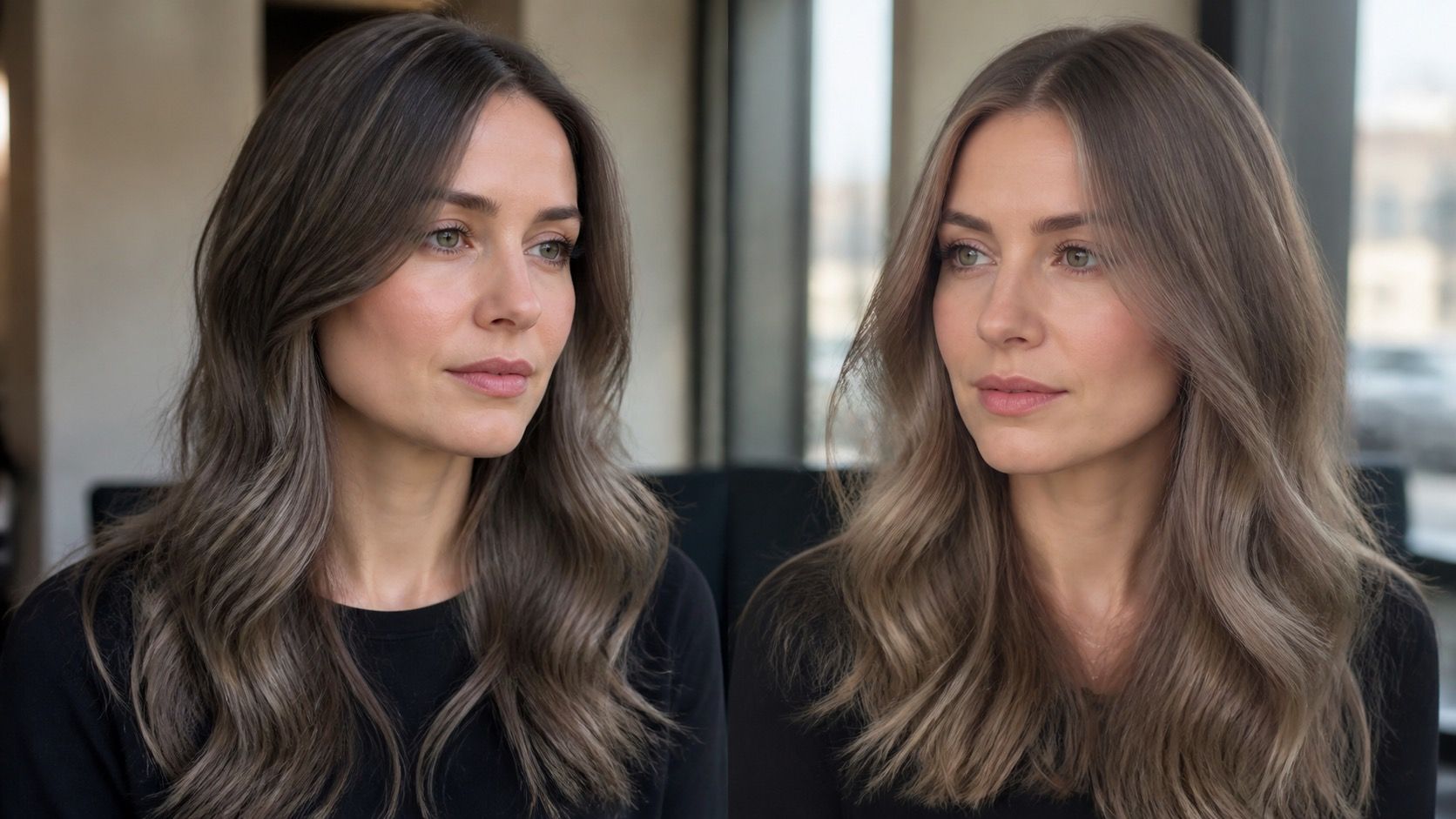
The safest first move is to compare directions, not categories. Put a cool ash option beside a soft neutral-taupe option. Then look for what happens to the face. Does one shade make redness stronger? Does one make the eyes clearer? Does one make the hair look separate from the person? Those reactions tell more than the season name.
Compare coolness, softness, and contrast
Coolness is the temperature of the shade. For Cool Summer hair color, clear coolness usually helps: ash, pearl, blue-violet toned brunette, smoky beige. For Soft Summer hair color, the coolness may need to be softened with neutral brown or beige so the result does not look too sharp.
Softness is the amount of muted chroma. Both seasons dislike aggressive brightness, but Soft Summer usually needs the colour to look more blended and slightly more greyed or taupe. Cool Summer can sometimes take a cleaner ash blonde or cooler brunette, as long as the contrast is still controlled.
Contrast is the gap between hair, skin, eyes, and brows. A person with very soft brows and misty eyes can be overwhelmed by high-contrast face-framing pieces even if the toner is technically cool. A person with stronger brow definition may need a little more depth at the root so the hair does not float away from the face.
| Question | Leans Cool Summer | Leans Soft Summer |
|---|---|---|
| How cool can the shade go? | Clear ash or pearl still looks clean | Strong ash can look dusty or separate |
| How much beige is comfortable? | Too much beige may look warm or dull | Neutral beige often makes the colour wearable |
| How should highlights sit? | Fine cool lights can brighten the face | Blended, low-contrast lights usually work better |
| What happens with depth? | Needs enough depth to match natural contrast | Often benefits from softened root contrast |
Hair examples that sit between the seasons
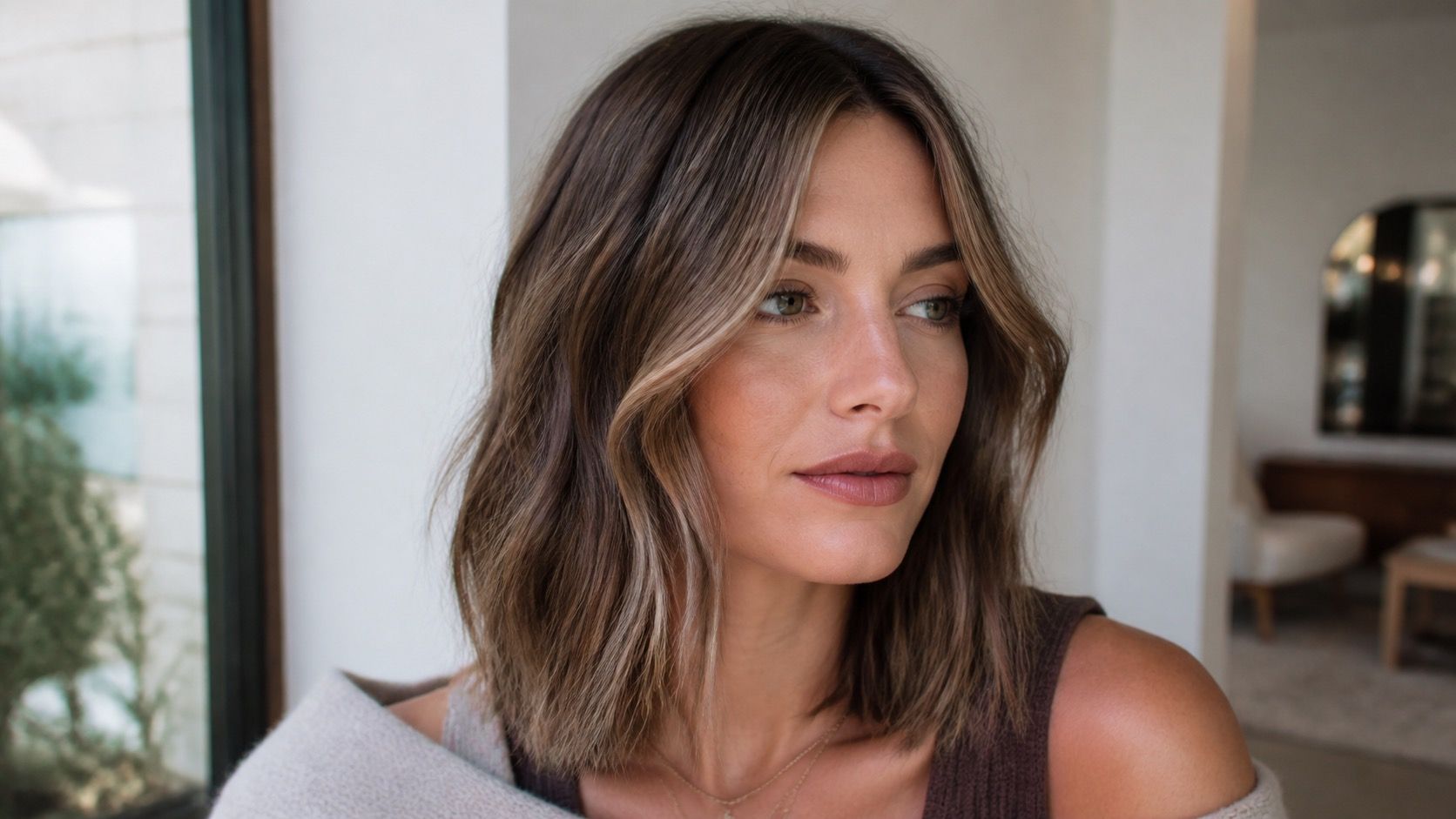
Many real heads of hair sit between the textbook examples. A mushroom brown can read Cool Summer if it is more ash-taupe, and Soft Summer if it has a softer beige-brown finish. A dark ash blonde can feel crisp on one person and too grey on another. The category changes less than the balance inside the colour.
Cool brunette is another overlap shade. On a Cool Summer, it may need a cleaner blue-violet or ash-brown reflect to calm warmth. On a Soft Summer, the same brunette might need a touch more neutral brown so it does not look flat. Neither route is a fixed diagnosis or a permanent identity. It is a styling framework.
Highlights create the strongest split. Cool Summer hair colors can include fine pearl or ash-beige lights near the face if the overall effect stays soft. Soft Summer hair colors usually look more natural when highlights are blurred into the base, with less lift and less obvious brightness at the hairline.
Rose and berry tones can also cross the line. A cool rose brown may suit both, but the Cool Summer version is often clearer and cooler, while the Soft Summer version is dustier and more brown-based. If the colour starts looking raspberry, violet, or fashion-pink in every light, it has probably moved beyond either natural seasonal direction.
Use your natural regrowth as evidence
Natural regrowth is boring in the most useful way. It shows your real depth, temperature, and contrast without salon lighting. Look at the first inch of root in daylight, preferably with hair pulled back from the face. Is it ash brown, dark blonde, taupe, soft mouse brown, cool beige, or neutral brown?
If the root looks distinctly cool and the face improves when warmth is removed, Cool Summer may be the cleaner direction. A cool summer hair color plan might keep the root close to natural depth and add ash-beige babylights, a pearl gloss, or a mushroom brunette refresh.
If the root looks softened rather than strongly cool, and very ashy colours make the face look grey, Soft Summer may be the more forgiving route. A soft summer hair color plan might use taupe brown, muted beige, soft mushroom blonde, or a low-contrast root melt that keeps the temperature cool-neutral instead of icy.
Old dye can confuse the evidence. Warm ends may be leftover colour, not your natural undertone. Bleached pieces may grab toner unevenly. If you are comparing Cool Summer vs Soft Summer hair color after years of colouring, judge the regrowth and the face first, then treat the ends as a separate salon problem.
Make a safer choice when both palettes seem plausible
When both palettes seem plausible, choose the lower-risk version first. That usually means staying close to natural depth, cooling warmth gently, and avoiding dramatic highlight intensity. A gloss, toner, or very fine babylights can test the direction without creating a hard grow-out line.
For a possible Cool Summer, the safe route is cool but not metallic: ash brown gloss, cool beige blonde, smoky brunette, or pearl dark blonde with a natural root. For a possible Soft Summer, the safe route is muted and blended: taupe brunette, soft mushroom brown, beige-ash blonde, or a root melt that reduces contrast.
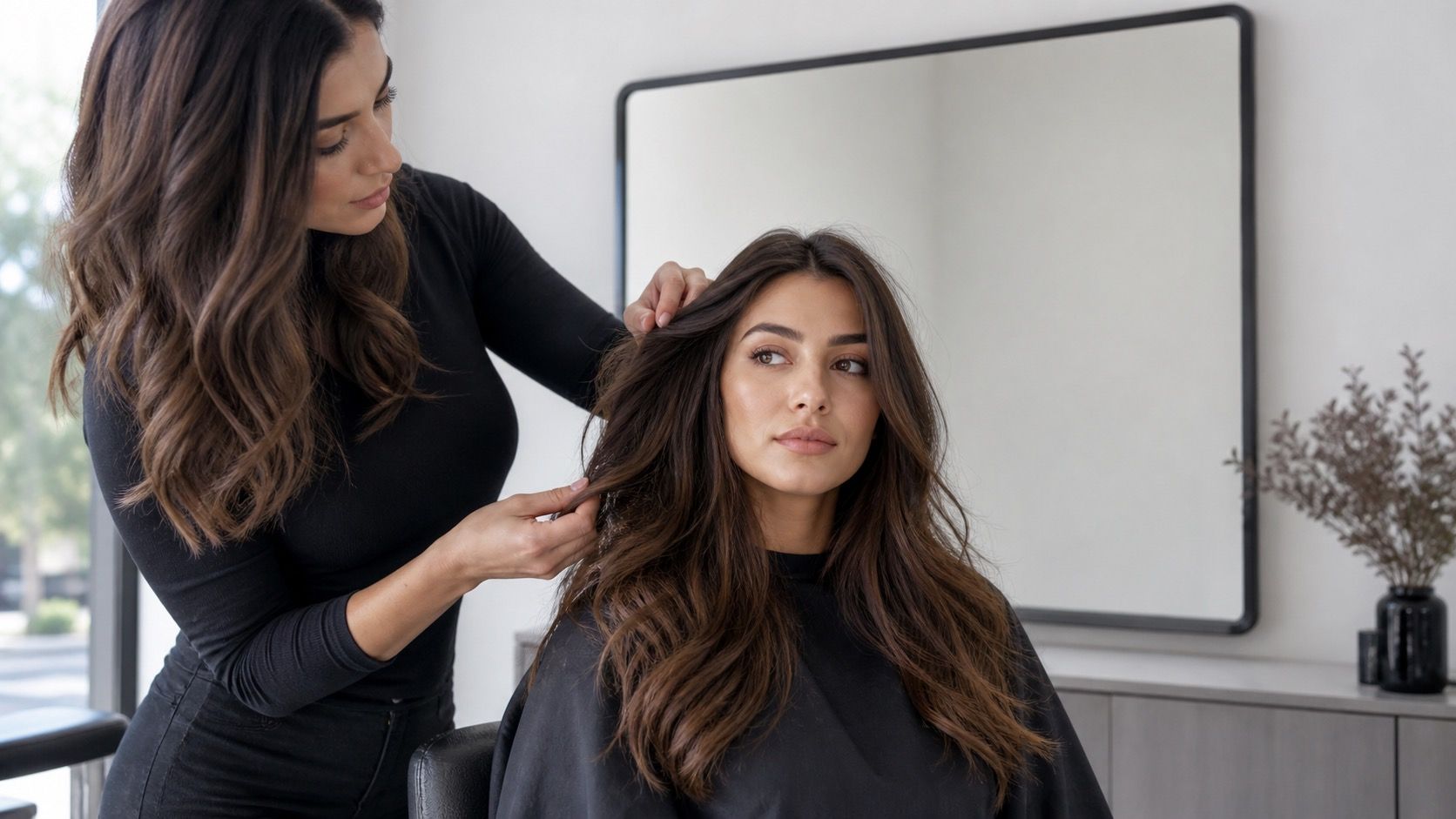
Bring a stylist a small set of references with notes. Mark one photo for tone, one for depth, and one for placement. Say which part you want copied and which part you do not. A single filtered photo cannot decide a seasonal palette, and it cannot show how your hair will lift.
If you use virtual try-on, compare families rather than exact shades. Try a cool brunette, a soft brunette, a cool blonde, and a muted beige blonde. Notice whether your face needs cleaner coolness or more softness. Then let the salon plan account for hair history, porosity, and maintenance. The better choice is the shade you can wear calmly after the first wash, not the one that wins in a screen preview.