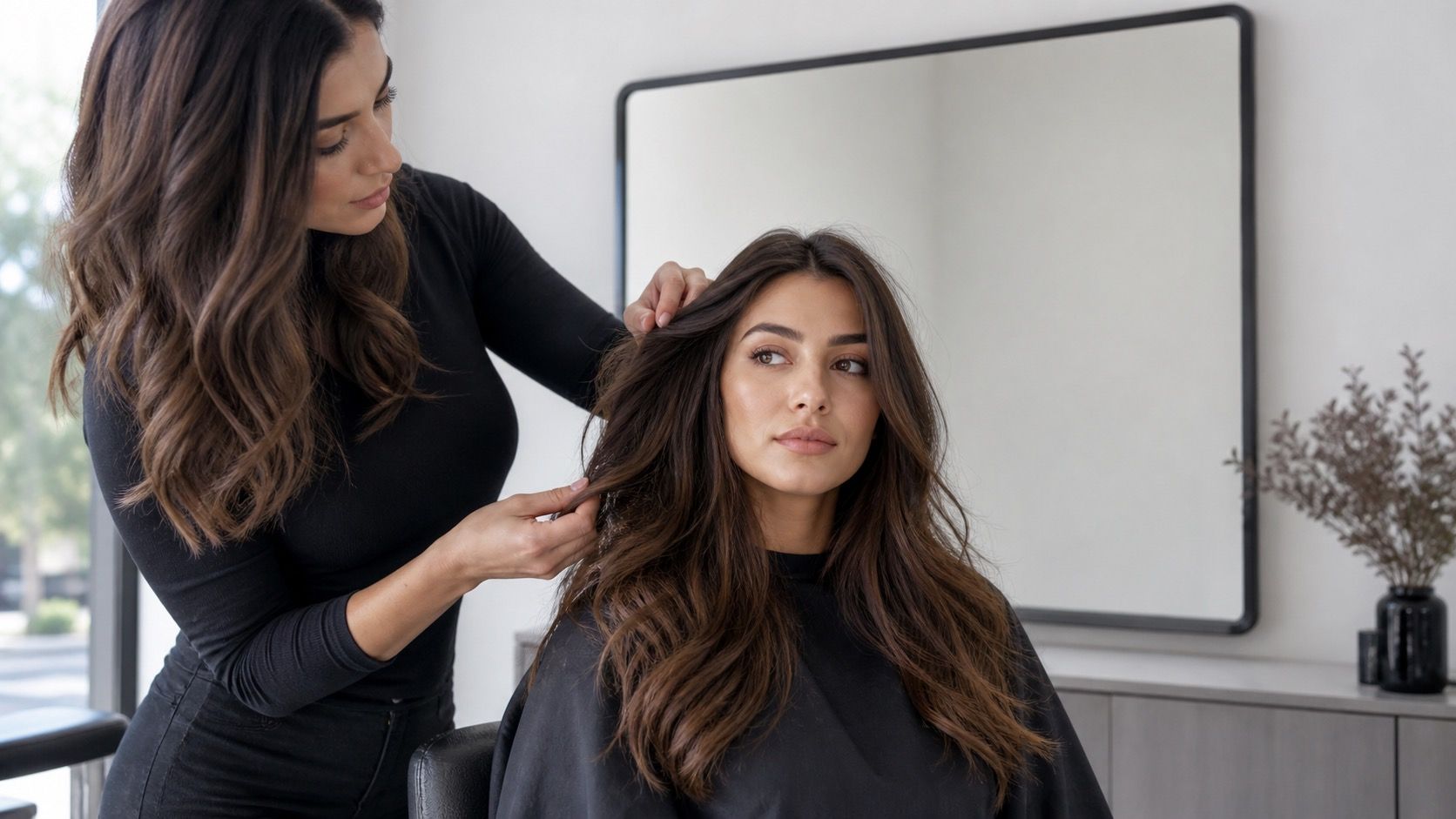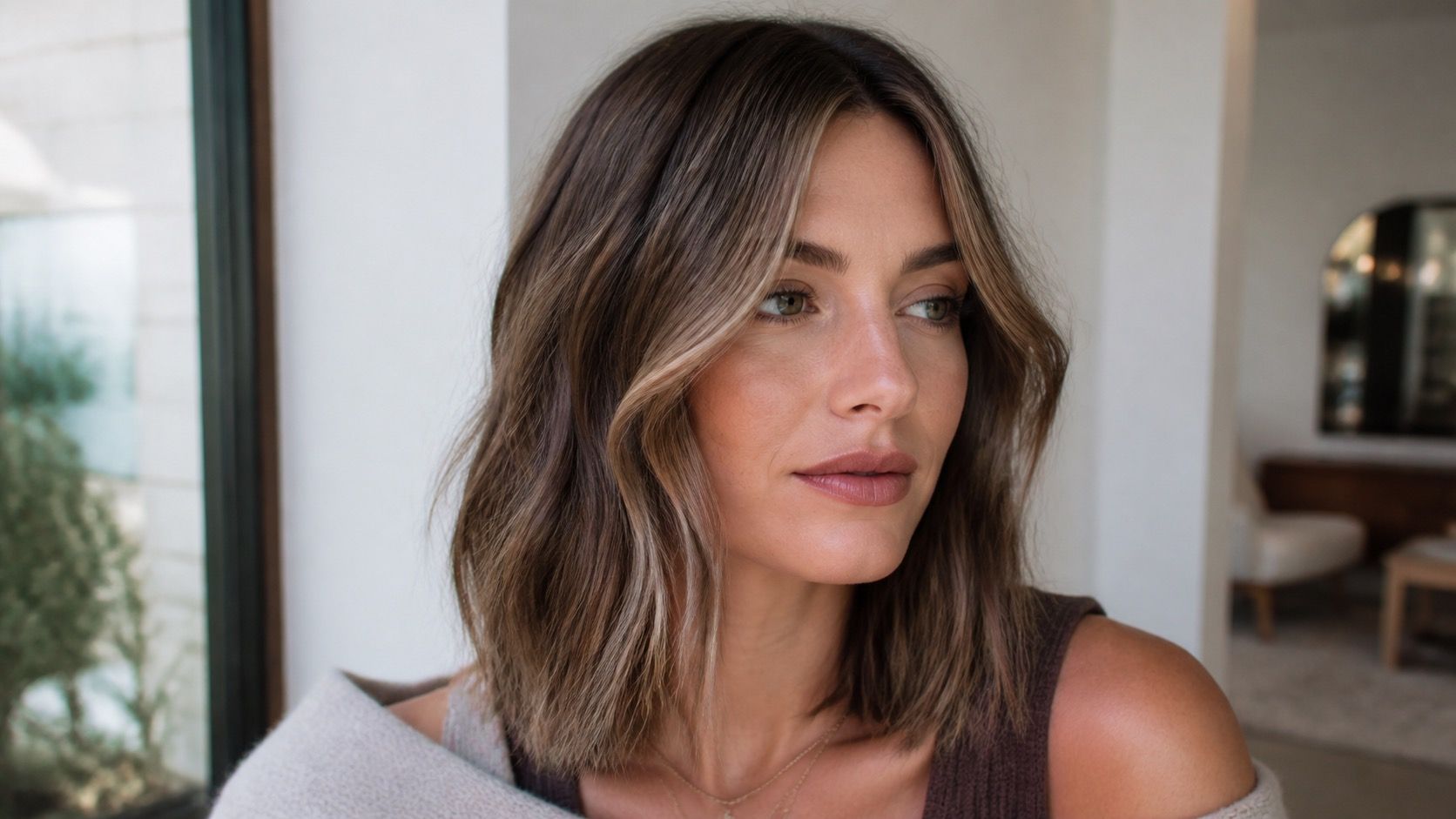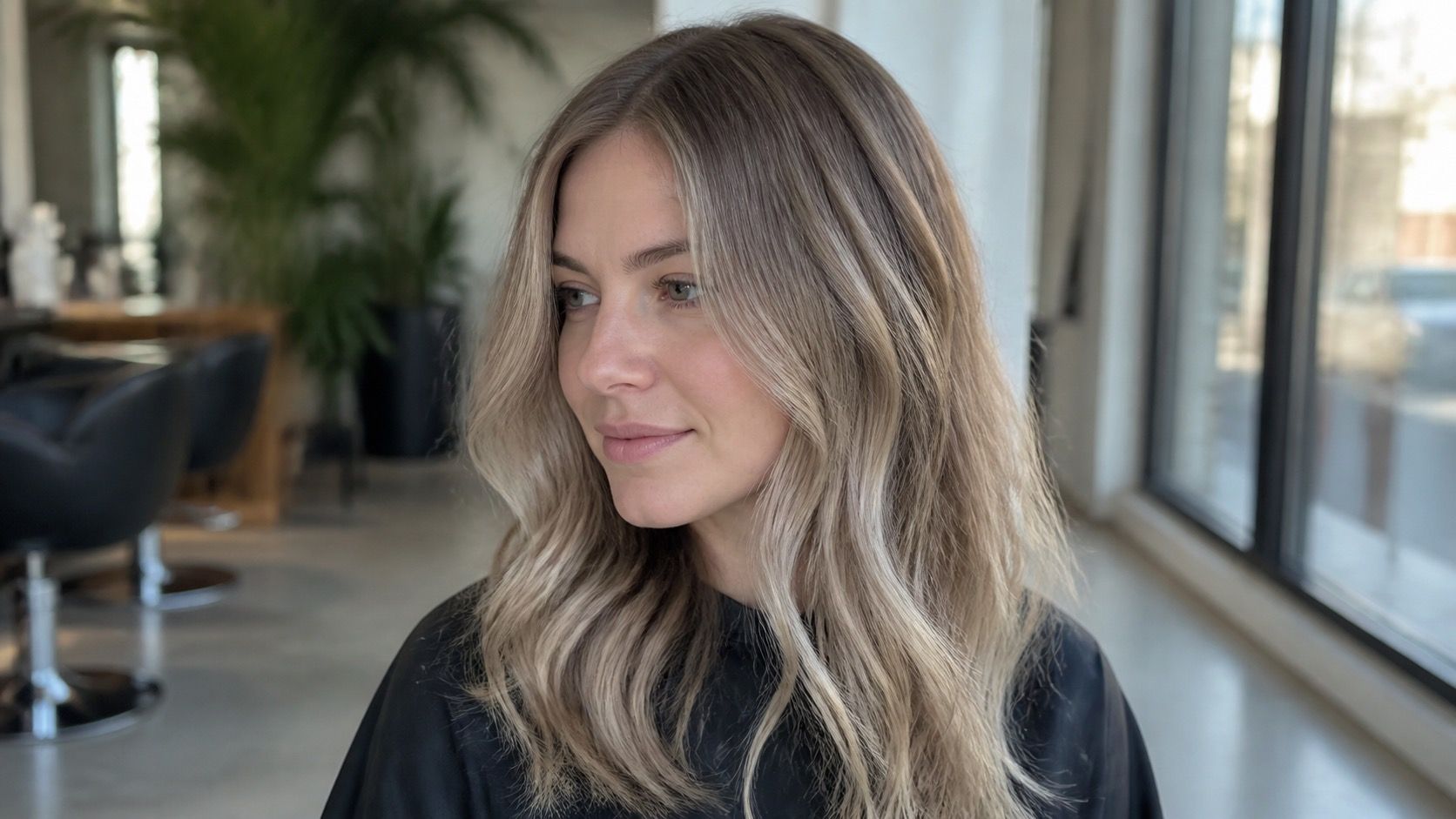
Cool Summer hair color needs a careful balance: cool enough to sit with blue-pink undertones, but soft enough that the shade does not turn sharp. The most flattering result usually looks controlled, blended, and slightly quiet rather than icy or dramatic.
The balance between coolness and softness
Cool Summer sits on the cooler side of the Summer family, but it still needs softness. That distinction matters in the salon. A cool hair color can be ash, silver, blue-black, violet, or slate. Not all of those belong on a Cool Summer face. The palette usually handles coolness best when the contrast stays moderate and the finish has a little softness.
Look at the natural features before choosing a formula. Cool Summer often has a blue-pink undertone, softer eyes, and light-to-medium depth in the overall coloring. Hair that becomes too yellow can fight the undertone. Hair that becomes too dark can make the face look harder. Hair that becomes too silver can look artificial unless the natural coloring already supports that level of coolness.
A good Cool Summer hair color should make the skin look clearer without making the hair look separate. Think ash blonde with depth, cool brown with movement, or plum brown softened by a brown base. The shade should read cool in daylight, not grey in every room.
Blonde shades that do not turn harsh
Ash blonde is the obvious direction, but the useful versions are rarely the palest ones. Dark ash blonde, soft ash beige, cool pearl blonde, and mushroom blonde can work because they keep depth in the hair. Very pale silver blonde may be too stark if the brows, lashes, and eyes are softer.
Brass control matters for blonde, especially when the hair naturally lifts warm. A violet or blue-violet toner can reduce yellow and orange, but too much ash can make porous ends look smoky in a dull way. The colorist has to balance correction with softness. That is why a reference photo labeled ash blonde is not enough; one ash blonde may be beige and wearable, another may be nearly grey.
Root blend is also important. A shadow root close to the natural base can stop blonde from looking like a separate cap. For Cool Summer, the root should feel cool-neutral, not warm brown. The transition from root to highlight should be blurred enough that regrowth looks planned rather than neglected.
Brown shades with enough depth
Cool brown can be one of the strongest Cool Summer hair colors when it avoids two extremes: golden warmth and heavy darkness. Soft ash brown, cool mocha, mushroom brown, and medium cool brunette can bring definition while staying calm around the face.
Depth should be chosen with the natural base in mind. A person with dark blonde hair may only need a cool lowlight pattern or a gloss. A person with medium brown hair may need a cooler glaze and subtle face-framing pieces. Jumping straight to very dark brown can create more contrast than the palette can comfortably carry.
Blue-black is the classic risk. It is cool, but it is also high contrast and very clean. On many Cool Summer faces, it can make the skin look paler and the features look sharper in a way that feels disconnected. If you want a deeper result, ask for a softened cool brown or a brown-black with visible dimension rather than a flat inky shade.
How to keep highlights from becoming icy
Highlights for Cool Summer should brighten without turning the hair frosty. Fine ribbons, soft balayage, or delicate face-framing can work when the highlight contrast stays close to the base. Thick white pieces often look too graphic, especially if the rest of the hair is medium brown.
The placement should follow how the hair falls. A few brighter pieces near the cheekbone can lift the face, but a heavy pale frame can overpower it. Around the crown and ends, low contrast dimension usually looks more natural than a strong stripe pattern. The viewer should notice movement before noticing the technique.
If highlights keep going icy after toning, the issue may be over-lifting, porous ends, or a toner that is too strong for the hair. The repair is not always to add warmth. Sometimes the better fix is a demi gloss, a softer beige-ash target, or lowlights that return depth to the overall color.
| Color choice | Good Cool Summer use | Possible problem |
|---|---|---|
| Dark ash blonde | Brightens while keeping softness and natural depth | Can look flat if over-toned |
| Cool brown | Adds definition without obvious warmth | Can become severe if too dark |
| Plum brown | Adds cool color while staying brunette | Can look artificial if too violet |
| Icy highlights | Useful only as tiny accents on the right base | Often too stark as a main look |
Signs a shade is too bright or too dark
A shade is too bright when the hair looks cleaner and stronger than the face. This can happen with icy blonde, high contrast highlights, or vivid cool fashion tones. The skin may look slightly grey, the eyes may look softer than usual, and makeup may feel necessary just to balance the hair.
A shade is too dark when it creates a hard outline. Very dark cool brown and blue-black can make the jaw, brows, and under-eye area look more pronounced. Some people like that drama, but it is not the same as a balanced Cool Summer result. If the color only works with stronger brows and lipstick, the depth may be doing too much.
A shade is too warm when brass appears faster than the rest of the color can support. Orange warmth near the face is usually more disruptive than a little beige warmth through the ends. If warmth is the recurring issue, talk about brass control, water minerals, heat styling, and realistic toning intervals instead of blaming one appointment.
What to discuss before changing the formula
Bring a colorist information about your hair history, not only inspiration photos. Previous box dye, old highlights, keratin treatments, and porous ends all affect how cool shades process and fade. Cool Summer hair color often depends on nuance, so the starting canvas matters.
Ask how the shade will look in four to six weeks. A cool brown may fade warmer. An ash blonde may need toner. Plum brown may soften into a quieter brunette or grab violet on dry ends. None of this is a guarantee of a bad result; it is the normal maintenance conversation that prevents surprise.
Virtual hair try-on can narrow the direction before the appointment. Use it to compare cool brown against ash blonde, or plum brown against a softer brunette. Do not expect it to predict the exact salon formula. The screen can exaggerate ash and flatten depth. The helpful part is seeing whether your face handles a lighter, darker, cooler, or more blended direction.